
 Request A Quote
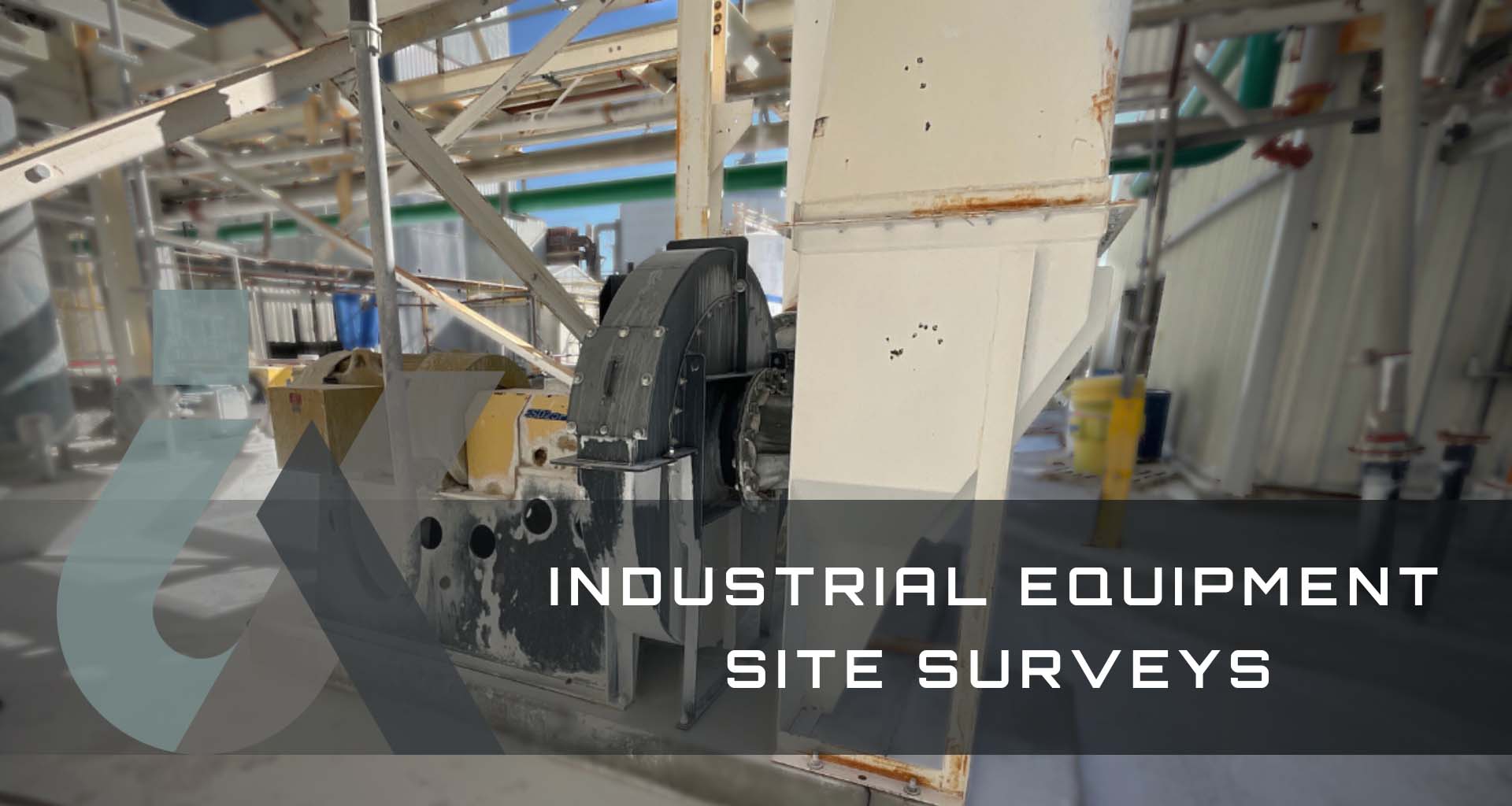
Unplanned failures force teams to hunt for specs and part numbers under pressure. Many plants have partial or scattered documentation, and turnover makes it harder to know what’s actually installed. An industrial equipment site survey creates an accurate record: a catalog of assets your team needs to schedule repairs and plan replacements.
Our technicians perform an on-site assessment of your existing equipment. The purpose is to catalog, assess, and document plant assets so maintenance and engineering have reliable, current information.
Schedule a site survey when documentation is incomplete, after major equipment changes, or on a multi-year cadence for aging plants and multi-site operators.
1. Equipment Cataloging
Surveyors walk the plant and identify each critical asset. Nameplate data (model, serial, ratings), materials of construction, and key specifications are recorded. Photos and tag IDs tie records to physical equipment.
2. Health and Condition Observations
Field notes document operating condition, visible wear, vibration or leakage indicators, and any signs pointing to a future failure window. This helps prioritize actions by risk and impact.
3. Measurements and Specifications
Dimensions, connections, and mounting details are captured so spares and replacements can be selected and installed without guesswork. This reduces rework and expedites quoting.
4. Repair & Replacement Recommendations
Findings are consolidated into practical next steps: repair now, monitor, or replace later. Teams get a clear path tied to maintenance windows and budget cycles.
Our team maps your plant, catalogs each asset, and digitizes the documentation tied to every unit. All records live in a secure portal with fast access at the site and across locations. Sharing is straightforward across teams, creating a single source of truth during outages, turnarounds, and day to day work.
When a critical asset fails, recovery hinges on whether specifications and part numbers are at hand. Centralized records shorten the search and accelerate quoting. They also let teams leverage spares across sites. The outcome is fewer emergencies and lower labor time. Over the long term, costs come down.
With accurate equipment data in place, plants can tie records into a CMMS, add monitoring for predictive maintenance, strengthen spares management, support compliance, and improve vendor/OEM coordination – step by step as needs grow.
Industrial XPO works with top equipment brands and supports the full lifecycle: selection, installation, service, and maintenance. The survey delivers the data baseline you need to move from reactive work to planned actions across steel, chemical, cement, food, and petrochemical sites.
Ready to build a dependable equipment record? Let Industrial XPO catalog your plant and support the installation, service, and maintenance that follows.
What information do we receive after the survey?
A digital catalog of assets with nameplate/spec data, photos, dimensions, digitized manuals/drawings, parts lists, and prioritized recommendations.
How often should a site survey be scheduled?
When documentation is incomplete, after major changes, or on a multi year cadence for aging plants and multi site operators.
How long does a site survey take?
Scope depends on equipment count and access. We align survey days with operations to minimize disruption and keep data quality high.
