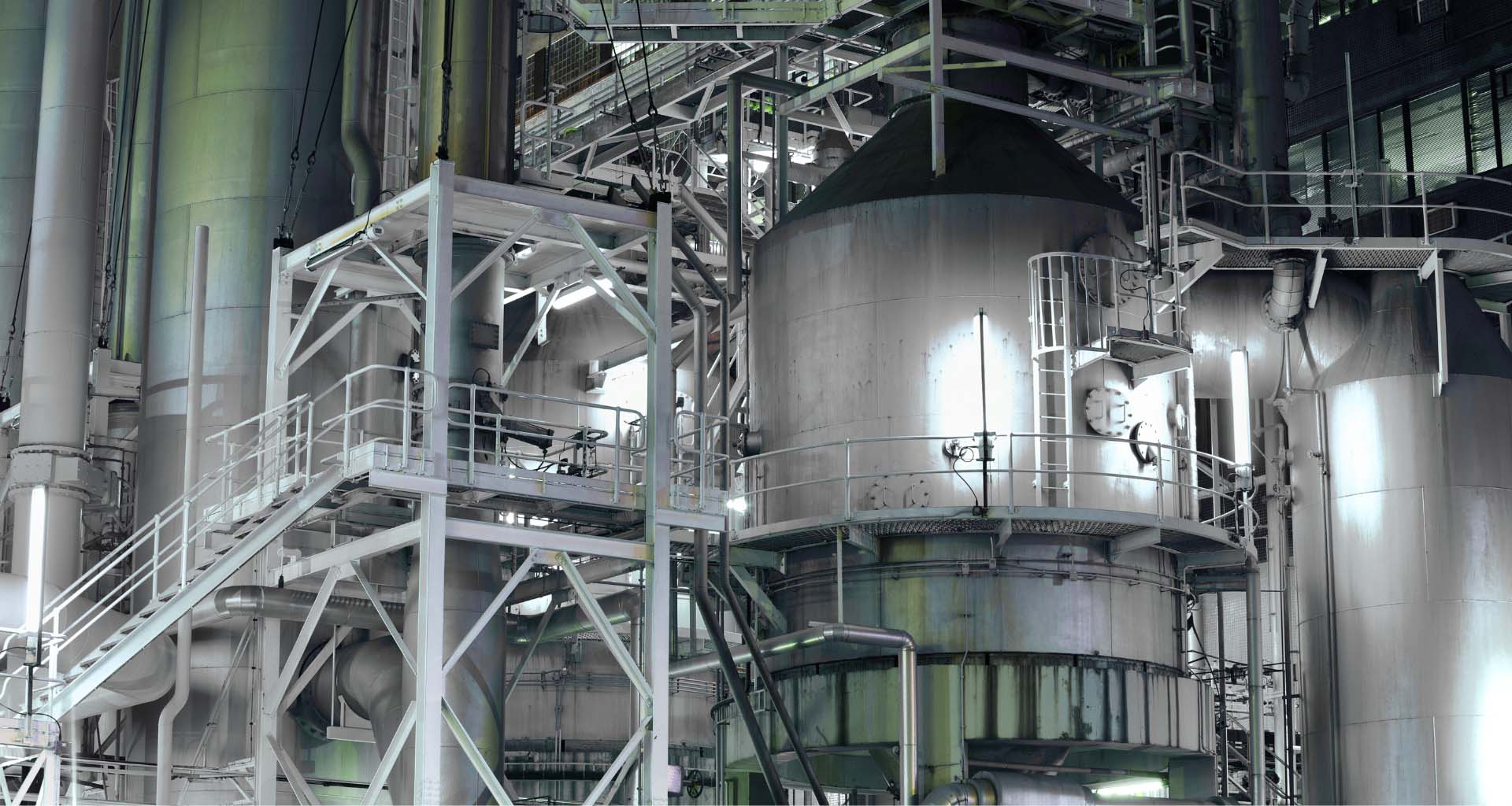
Corrosion is a daily reality in chemical manufacturing. Industry studies place its global economic impact around US$2.5 trillion (~3.4% of global GDP), spanning direct repair/replacement costs and indirect losses like downtime and incidents. Material selection is central to controlling those costs over the life of reactors, piping, pumps, and heat-transfer equipment. This article outlines the mechanisms, materials, and selection factors engineers can use when specifying corrosion-resistant equipment in plant service.
Why Corrosion in Chemical Plants Matters
- What’s in the mix: Plants work with acids, alkalis (bases), solvents, and process gases. How aggressive they are depends on concentration, temperature, and small impurities. That’s what drives your choice of corrosion resistant equipment and linings.
- How failures happen: Corrosion makes metal thinner, creates small holes in tight spots (like under gaskets), speeds up when different metals touch, can crack parts under stress, and wears away protective layers in fast moving or abrasive flows. You’ll see these issues at nozzles, joints, and low flow areas on reactors, exchangers, pumps/valves, piping, and tanks.
- Why safety is affected: Weakened equipment raises the risk of leaks, fires, and harmful exposure, especially during startups and shutdowns when conditions are unusual. Clear procedures and inspection/testing before returning equipment to service help prevent incidents.
- What it costs: Corrosion drives unplanned downtime, emergency repairs, and early replacements. A widely cited study estimates about US$2.5 trillion in global annual corrosion cost (≈3.4% of GDP), with 15–35% savings possible through good corrosion control practices.
- Environmental & regulatory impact: Leaks or releases mean cleanup, reporting, and potential enforcement. Better materials choices, routine inspection/testing, and solid documentation support compliance.
Common Types of Corrosion in Chemical Plants
- Uniform (general) corrosion — even wall loss across surfaces; predictable but still critical for pressure retaining equipment.
- Pitting corrosion — highly localized attacks that can perforate tubing and thin sections, often accelerated by chlorides and elevated temperature.
- Crevice corrosion — occurs under gaskets, deposits, lap joints, and bolted interfaces where oxygen concentration differs from bulk fluid.
- Galvanic corrosion — dissimilar metals electrically coupled in an electrolyte; the less noble metal corrodes preferentially.
- Stress corrosion cracking (SCC) — cracking due to tensile stress and corrosive species (e.g., chloride SCC in austenitic stainless steels).
- Erosion corrosion — accelerated attack from high velocity, abrasive slurries or impingement.
- Chemical attack — aggressive acids/alkalis/solvents degrade materials or coatings when compatibility is mismatched.
Where it shows up: tube sheets and gasket grooves (crevice/pitting), pump casings and impellers (erosion corrosion), bolted connections (galvanic), chloride rich services at elevated temperature (SCC).
Materials of Construction for Corrosive Environments
- Stainless steel alloys (304, 316, duplex)— 316/duplex grades offer improved resistance to chloride pitting/SCC versus 304; duplex adds higher strength and better chloride tolerance. Suitability depends on chloride content, temperature, and acidity.
- Nickel based alloys (Hastelloy C 276, Inconel) — selected for strong resistance in mixed acid/chloride environments and high temperature oxidizing media; typically used in critical wetted parts or entire vessels where stainless performance is marginal.
- FRP (fiberglass reinforced polymer) laminates — vinyl ester resin systems and dual laminate constructions (e.g., PVDF/FRP, FEP/FRP) provide long term service in many acid/alkali streams; appropriate for tanks, ducts, scrubbers, and certain pipelines. Resin and liner choice must match temperature/chemistry.
- Specialty plastics (PTFE, PVDF, polypropylene) — used for linings, gaskets, and components where broad chemical resistance is needed at defined temperatures. Reference chemical compatibility data for the exact fluid mix and conditions.
Key Equipment That Requires Corrosion Resistance
- Reactors and vessels — watch for gasket grooves, nozzles, agitator penetrations; select internal linings or higher alloy construction for mixed acid streams.
- Heat exchangers — tube metallurgy, baffle design, and crevice geometry drive corrosion risk; failures often initiate at joints and stagnant zones.
- Pumps and valves — erosion corrosion and galvanic couples are common; check casing/impeller materials, shaft sleeve alloys, and seal metallurgy against fluid chemistry/velocity.
- Piping and storage tanks — where dual laminate FRP or lined systems can reduce lifecycle costs for aggressive services.
- Fans and blowers — gas side corrosion in corrosive atmospheres; consider FRP housings/ducts or coated metals for acid gases and high humidity.
Factors to Consider When Selecting Equipment
- Chemical composition and concentration — validate against vendor compatibility tables and test coupons where data is limited.
- Operating temperature and pressure — many materials show sharp drops in resistance above specific thresholds; confirm the actual maximum operating temperature (not just design).
- Flow conditions and velocity — slurry content and impingement increase erosion corrosion; adjust materials and geometry accordingly.
- Required service life — assess total cost of ownership, not just first cost, considering inspection intervals, spare parts, and repair methods.
- Contaminants and transients — minor species can shift corrosion mechanisms; capture realistic off normal conditions in the datasheet sent to suppliers.
Working with Equipment Suppliers
Application engineering matters. Accurate process data and collaborative sizing/model selection reduce misapplication risk. Industrial XPO provides application engineering, installation, and field service with access to reputable manufacturers, giving plants one accountable partner for equipment and lifecycle support.
Material validation. For critical services, request corrosion coupon testing, past service histories, or independent compatibility confirmations—especially for blends, slurries, or elevated temperatures.
Partner with Industrial XPO
Picking the right material and construction for corrosive duty is about matching specific chemistry and conditions to proven equipment solutions. Industrial XPO works with top equipment brands, and we provide, install, service, and maintain the systems that keep production on line across steel, chemical, cement, food, and petrochemical plants. If you’re planning upgrades or replacements, our team can help specify the right metallurgy or FRP/liner system and manage installation and service.
FAQ
Is FRP better than stainless steel for chemical processing?
It depends on the chemical, concentration, and temperature. FRP with the right resin or dual laminate liner (e.g., PVDF/PFA) can outperform metals in many acid/alkali services and eliminate chloride related pitting/SCC risk. Stainless (316/duplex) or nickel alloys remain preferred in hot, oxidizing, or high pressure duties. Selection should be based on compatibility data and service temperature limits.
What is the best material for corrosive chemical environments?
There is no single “best” material. Use compatibility charts and vendor guidance to match PTFE/PVDF/polypropylene, FRP systems, stainless (316/duplex), or nickel alloys to the exact fluid and temperature. Verify against manufacturer tables and consider testing for mixed chemistries.
What causes premature corrosion failure in chemical plants?
Common drivers include crevices at gaskets and lap joints, dissimilar metal couples, inadequate materials for hot chlorides/oxidizers, high slurry velocities (erosion corrosion), and incomplete process data during specification. Design details and metallurgy choice at connections and stagnant zones are crucial.
Links
[1] Industrial XPO — Homepage:
https://industrialxpo.com/
[2] IndustrialXPO Services — Installation, Service, Maintenance:
https://industrial-xpo.com/services/
[3] IndustrialXPO Industries:
https://industrialxpo.com/industries/
[4] AMPP/NACE IMPACT Study — Global Cost of Corrosion:
http://impact.nace.org/documents/Nace-International-Report.pdf
[5] U.S. CSB — Startup/Shutdown Safety Digest (incident frequency during transients):
https://www.csb.gov/assets/1/6/csb_digest_-_startup_shutdown.pdf
[6] AMPP Cost of Corrosion Study:
https://www.ampp.org/technical-research/what-is-corrosion/corrosion-reference-library/cost-of-corrosion-study

 Request A Quote